
Samsung Galaxy S26 Ultra vs Xiaomi 17 Ultra in UAE (2026): Flagship Comparison
Miles Telecom ·
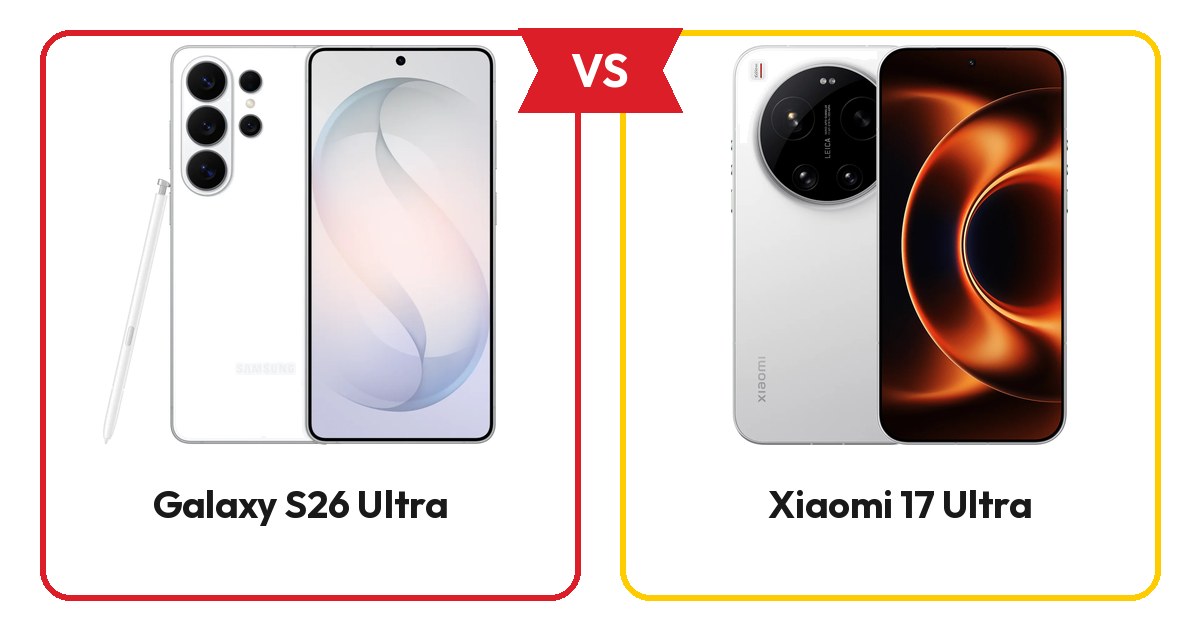
The Galaxy S26 Ultra and Xiaomi 17 Ultra both give you a 6.9-inch display, but their strongest listed differences lie elsewhere. Samsung highlights a Privacy Display, while Xiaomi pairs a 6000 mAh battery with explicitly rated 90W wired and 50W wireless charging.
For a UAE buyer comparing the Samsung Galaxy S26 Ultra with the Xiaomi 17 Ultra, the choice largely hinges on travel zoom and charging habits. Weigh whether you value Samsung's on-screen privacy protections or Xiaomi's larger battery pack and dedicated high-resolution telephoto lens. Daily comfort with One UI 8.5 or HyperOS 3 matters more than a secondary spec sheet feature you rarely open.
UAE price in AED
Samsung Galaxy S26 Ultra
Samsung Galaxy S26 Ultra 5G 16GB 1TB White UAE Version (TDRA): AED 4,875
Xiaomi 17 Ultra
Xiaomi 17 Ultra 5G 16GB 1TB White – UAE Version (TDRA): AED 4,960
When assessing the Samsung Galaxy S26 Ultra against the Xiaomi 17 Ultra, compare the storage tiers and regional configuration as carefully as the model name. Because both flagship variants listed here feature 16GB of RAM and 1TB of storage, verify memory tiers carefully when comparing retail offers. Keeping the exact 16GB/1TB SKU noted ensures quotes reflect an identical setup.
Specifications compared
| Specification | Samsung Galaxy S26 Ultra | Xiaomi 17 Ultra |
|---|---|---|
| Display | 6.9″ Dynamic AMOLED (Privacy Display) | 6.9″ HyperRGB OLED, 2608 × 1200, 1–120 Hz, Dolby Vision®, HDR10+ |
| Processor | Qualcomm Snapdragon 8 Elite Gen 5 for Galaxy | Qualcomm Snapdragon® 8 Elite Gen 5 (3 nm) |
| Rear Camera | 200 MP main + 50 MP Ultra‑Wide + 50 MP Telephoto lenses | 50 MP main with OIS; 50 MP ultra-wide; 200 MP Leica APO telephoto with OIS |
| Battery | ~5000 mAh | 6000 mAh |
| Charging | Super Fast charging, wireless charging | 90 W wired, 50 W wireless, reverse wireless |
| Operating System | Android 16 with One UI 8.5 | Android 16 with HyperOS 3 |
The Samsung Galaxy S26 Ultra and Xiaomi 17 Ultra entries above describe documented catalog configurations rather than laboratory benchmarks. Xiaomi's 120 Hz display ceiling does not dictate sustained game frame rates, nor does its 90 W wired rating guarantee peak speed across an entire charge cycle. Use these figures to shortlist your priorities, then consider which focal length you shoot with most often.
Camera
Samsung assigns 200MP to its main camera alongside 50MP ultra-wide and telephoto lenses. Xiaomi places a 50MP sensor on its main and ultra-wide cameras, but steps up to a 200MP Leica APO telephoto with OIS. That placement matters: a high-resolution telephoto and a high-resolution primary lens serve very different photographic roles.
When evaluating the Galaxy S26 Ultra against the Xiaomi 17 Ultra camera setup, consider how you capture scenes across varying distances. Evaluate the final processed photograph from Samsung's 200MP primary sensor or Xiaomi's 200MP Leica telephoto rather than relying on the viewfinder. This focuses on how the 200MP wide and 200MP telephoto sensors actually render detail in your typical environments.
Battery and charging
Xiaomi lists a 6000mAh capacity with 90W wired, 50W wireless, and reverse wireless charging. Samsung records approximately 5000mAh with Super Fast wired and wireless charging without publishing specific wattage figures. While Xiaomi provides more numerical detail, battery capacity alone cannot determine total runtime under varied real-world use.
Gaming performance
Both devices feature the Snapdragon 8 Elite Gen 5 platform, with Samsung listing its custom "for Galaxy" variant. Sharing a chipset architecture does not guarantee identical sustained thermals. Check available graphical presets in your preferred titles, as software optimisation can constrain settings independently of hardware.
Demanding sessions, prolonged midday screen brightness, and mobile network handoffs will quickly influence power consumption and thermal stability on both 6.9-inch flagships. For the Samsung Galaxy S26 Ultra and Xiaomi 17 Ultra, no comparative thermal testing is documented here, so no heat-dissipation winner is claimed.
Software support
One UI 8.5 and HyperOS 3 both run on Android 16 across these devices. Anyone switching ecosystems should review local cloud backups, photo library sync, and work profile management. Neither manufacturer entry includes a documented, numerical OS update lifespan in this comparison table.
Advantages
Samsung Galaxy S26 Ultra
The Galaxy S26 Ultra stands out with its integrated Privacy Display feature and a 200MP high-resolution primary camera sensor.
Xiaomi 17 Ultra
Xiaomi provides a 200MP Leica APO telephoto lens, a larger 6000mAh battery, and clearly stated 90W wired and 50W wireless charging ratings.
Disadvantages
Samsung Galaxy S26 Ultra
Samsung lists an approximate 5000mAh capacity and omits precise charging wattages, offering less numerical certainty for charging-focused comparisons.
Xiaomi 17 Ultra
With its 6.9-inch display, the Xiaomi 17 Ultra shares Samsung's broad physical footprint rather than offering a smaller form factor.
Final buying verdict
Choose the Samsung Galaxy S26 Ultra if on-screen privacy filtering and One UI 8.5 are your main criteria. Choose the Xiaomi 17 Ultra if you want the dedicated 200MP telephoto lens, the 6000mAh battery capacity, and documented 90W fast charging.
Before finalising an order for either the Galaxy S26 Ultra or Xiaomi 17 Ultra, verify that the packaging denotes the official TDRA UAE specification rather than an unverified grey-market import. Confirm TDRA-approved UAE retail packaging for both the S26 Ultra and Xiaomi 17 Ultra against non-local market imports to guarantee network compatibility and warranty coverage.
Miles Telecom can confirm product details for your chosen configuration. Verify the exact 16GB/1TB capacity and official TDRA designation for either device to ensure warranty and network compatibility.
Related guides
- Samsung Galaxy S26 Ultra: Choose Storage Before Colour
- Samsung Galaxy S26 Ultra 5G 16GB 1TB White UAE Version (TDRA)
- Xiaomi 17 Ultra: Think About Travel Photos and Pocket Space
- Xiaomi 17 Ultra 5G 16GB 1TB White – UAE Version (TDRA)
- Samsung Galaxy S26 Ultra 5G UAE Version (TDRA)
- iPhone 18 Pro Max vs Samsung Galaxy S26 Ultra in UAE (2026): Which Is Better?
- iPhone 18 Pro vs Samsung Galaxy S26 Ultra in UAE (2026): Price, Camera & Battery